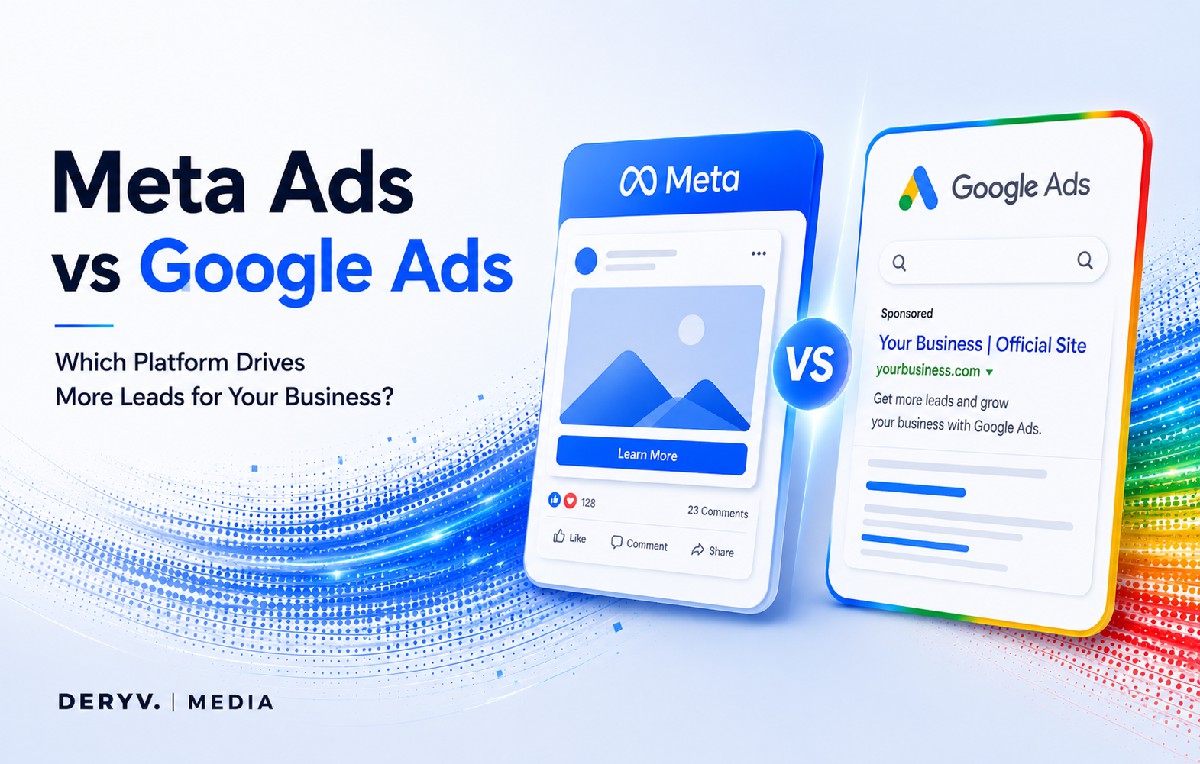

One of the most common questions businesses ask before investing in digital advertising is: should we run Google Ads or Meta Ads?
The honest answer is that neither platform is universally better.
The right choice depends on your business model, your customers' buying behaviour, and where they are in their decision-making journey.
Businesses often waste advertising budget by choosing a platform based on popularity instead of strategy. Understanding how each platform works can help you make a smarter investment and generate better long-term results.
The Biggest Difference: Demand Capture vs Demand Creation
The fundamental difference between Google Ads and Meta Ads is not the interface or the targeting options.
It's user intent.
When someone searches on Google, they are actively looking for information, a product, or a service. They already have a problem and are seeking a solution.
When someone scrolls through Facebook or Instagram, they are consuming content and entertainment. Advertising interrupts that experience and introduces products or services they may not have been considering.
In simple terms:
- Google Ads captures existing demand.
- Meta Ads creates new demand.
Understanding this distinction often determines whether a campaign succeeds or struggles.
Google Ads: Best When Customers Are Already Looking
Google Ads performs exceptionally well when potential customers already know what they need.
Examples include:
- Digital marketing agencies
- Lawyers
- Doctors
- Accountants
- Home repair services
- Software solutions
- Professional consulting
- Emergency services
When users search for phrases such as "Google Ads agency near me" or "best tax consultant for small business," they are typically much closer to making a decision.
Because of this higher purchase intent, Google Ads often generates fewer but more qualified enquiries for service-based businesses.
Meta Ads: Best for Building Interest and Awareness
Meta Ads reaches users across Facebook, Instagram, Messenger, and other Meta properties while they browse social content.
Rather than responding to existing demand, Meta introduces products and services to audiences based on interests, behaviours, demographics, and AI-powered audience modelling.
This makes Meta particularly effective for:
- Fashion brands
- Beauty products
- Restaurants
- Fitness businesses
- Interior design
- Consumer products
- Lifestyle brands
- Visual e-commerce products
Strong creative content can generate significant interest even when users were not actively planning a purchase.
Lower Cost Doesn't Always Mean Better Performance
Businesses often compare platforms by cost per click or cost per lead. While those metrics are useful, they rarely tell the complete story.
For example:
- Platform A generates leads at ₹600 each.
- Platform B generates leads at ₹1,400 each.
At first glance, Platform A appears superior. However, if Platform A converts only 3% of leads into customers while Platform B converts 15%, the more expensive leads may actually produce a lower customer acquisition cost and a significantly better return on investment.
The quality of leads matters far more than the quantity of leads.
Successful advertisers evaluate campaigns based on revenue and customer acquisition — not simply lead volume.
Which Platform Is Better for Lead Generation?
For many service-based businesses, Google Ads often produces higher-intent enquiries because users are actively searching for a solution.
Meta Ads can generate larger volumes of leads at a lower initial cost, but those leads may require additional nurturing before becoming customers.
This doesn't mean one platform is better than the other. It simply means they serve different purposes within the customer journey.
Businesses focused exclusively on cost per lead may overlook the importance of lead quality and eventual sales performance.
Which Platform Is Better for E-commerce?
The answer depends on the buying behaviour of the product.
Products purchased emotionally or visually often perform well on Meta because compelling creative can create immediate interest.
Products researched carefully or purchased with clear intent often perform strongly on Google, where shoppers actively compare options before buying.
Many successful e-commerce brands use Meta to introduce products and Google to capture high-intent shoppers who later search for the brand or product directly.
AI Is Changing Both Platforms
Both Google and Meta have invested heavily in artificial intelligence to improve campaign performance.
Google increasingly relies on automated bidding, audience signals, and AI-driven campaign optimisation.
Meta continues expanding AI-powered campaign automation through systems such as Advantage+, helping advertisers simplify campaign management and improve performance.
As automation increases, competitive advantage comes less from pressing buttons inside the platform and more from understanding customer behaviour, creative strategy, messaging, and measurement.
So Which Platform Should Your Business Choose?
A simple framework can help.
Google Ads is often the stronger starting point if you:
- Sell professional services
- Generate B2B leads
- Depend on local searches
- Offer urgent or problem-solving solutions
- Want to capture existing demand
Meta Ads is often the stronger starting point if you:
- Sell visually appealing products
- Need brand awareness
- Launch new products
- Build communities
- Create demand before customers start searching
Many businesses achieve the strongest results by using both.
Meta introduces potential customers to the brand. Google captures those customers when they later begin researching solutions or comparing providers. Rather than competing with each other, the two platforms frequently complement each other throughout the buying journey.
Final Thoughts
The question isn't whether Google Ads or Meta Ads is better.
The better question is: which platform aligns with your customers' buying behaviour and your business objectives?
Choosing the wrong platform can lead to disappointing results, even with a healthy advertising budget. Choosing the right strategy can improve lead quality, increase return on investment, and create a more predictable path to growth.
At DigitalCoz, we help businesses evaluate their goals, audience, and sales process to determine where advertising budgets can create the greatest impact — because success rarely comes from choosing one platform over another, but from understanding how each supports the customer journey.